Invasive Ductal Carcinoma: What the Name Means and What Comes Next
The pathology report says "invasive ductal carcinoma," and suddenly every word feels heavy. It is a lot to take in, usually in a short phone call. But the name is more of a starting point than a verdict. Invasive ductal carcinoma, or IDC, is the most common form of breast cancer, and the treatment plan depends far less on that label than on three details printed further down the page. That deeper read is what Healz was built to do.
Most people only hear the diagnosis once and never get the report explained. Learning how to read your pathology report can turn a stack of unfamiliar terms into a list of questions you can actually ask.
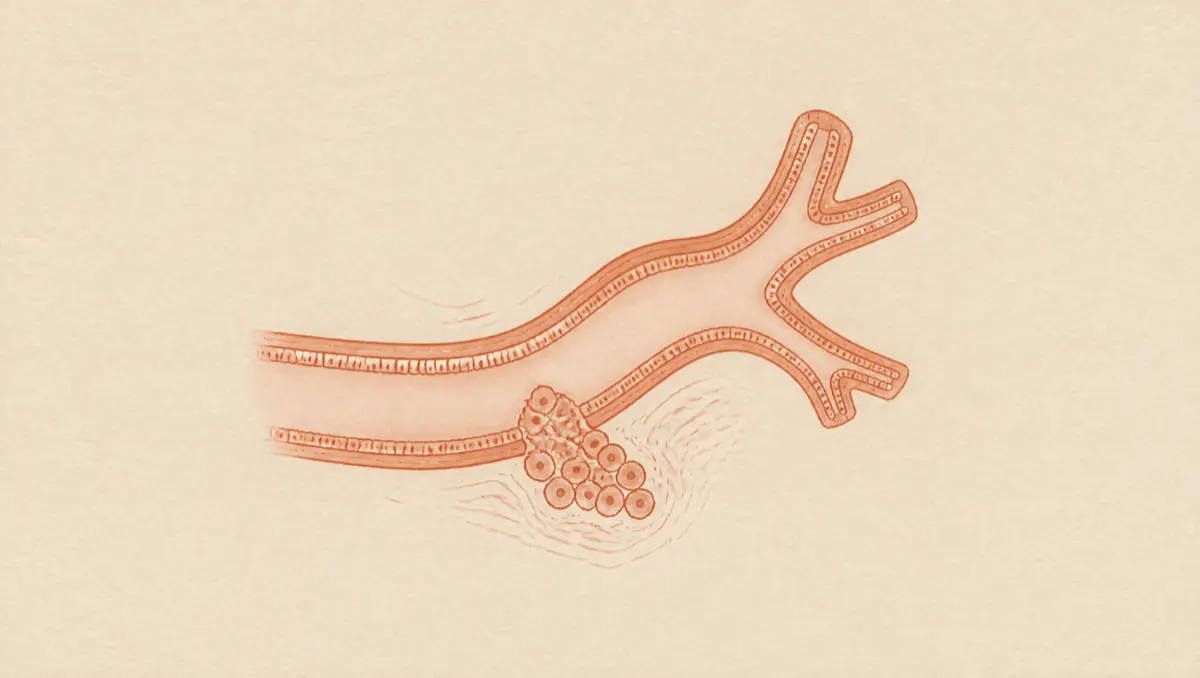
What "invasive ductal" really describes
Breast tissue contains ducts, the small channels that carry milk toward the nipple. IDC starts in the cells lining those ducts. When it is "in situ," the cells stay inside the duct. When it is invasive, they have broken through the duct wall and entered the surrounding tissue, which is why it is treated more seriously.
"No special type" is a phrase you may see next to IDC. It just means the cells do not match a rarer pattern such as lobular, mucinous, or tubular cancer. It is not a vague answer. It is the pathologist's way of saying this is the common kind.
Ask Healz.
One chat instead of ten apps. 1M+ rare cases checked. The root cause, not the label. Private.
Three details that matter more than the name
Grade. Pathologists score three features under the microscope: how much the cells form normal duct-like structures, how irregular the nuclei look, and how fast the cells are dividing. Each gets a score from 1 to 3, and the total sets a grade from 1 (slower growing) to 3 (faster growing). Grade 3 sounds alarming, but fast-growing tumors often respond well to chemotherapy. If your report lists Ki-67, that is one more way of measuring how quickly the cells are dividing, explained in Ki-67 on your pathology report.
Receptors. The tumor is tested for estrogen receptor (ER), progesterone receptor (PR), and HER2. Most IDCs are hormone receptor positive, which opens the door to endocrine therapy. HER2-positive tumors can be treated with targeted drugs that did not exist a few decades ago. Tumors negative for all three are called triple negative, and they follow a different treatment path.
Stage. Stage combines tumor size, lymph node involvement, and whether the cancer has spread to other organs. Current staging also folds grade and receptor results into a "prognostic stage," so two people with the same size tumor can land in different groups. If this part is confusing, our guide to understanding cancer staging walks through it.
What treatment usually looks like
Surgery is the usual first step for early IDC. For many people, lumpectomy followed by radiation gives survival comparable to mastectomy, per the National Cancer Institute, so the choice often comes down to tumor size, breast size, and personal preference. A sentinel lymph node biopsy checks whether cancer has reached the nearby nodes.
After surgery, what comes next depends on those three details. Hormone receptor positive tumors typically get endocrine therapy for five to ten years. HER2-positive tumors get HER2-targeted drugs. Chemotherapy is used when the risk of recurrence justifies it, and for some hormone positive tumors, a genomic test like Oncotype DX helps decide whether it is needed at all. Sometimes treatment starts before surgery, to shrink the tumor and see how it responds.
Questions worth bringing to your next appointment
You do not need medical training to ask good questions. A few that tend to matter: What is my grade, and what is my ER, PR, and HER2 status? Were my lymph nodes involved? Would a genomic test change my treatment? Is a second opinion reasonable before I commit to a plan? A cancer second opinion is routine, and good oncologists expect it.
How Healz reads an IDC report
A pathology report is dense, and the important parts are spread across several pages. Healz puts everything in one chat instead of ten apps. Healz is equipped with Frontier AI, so it reads the grade, receptor results, margins, and node findings together and tells you what each one means for your options. Healz has root-cause technology, so it cross-checks your case against more than a million rare and complex cases instead of stopping at the label. Healz has memory, so your imaging, pathology, and lab results stay connected over time. If you want a human opinion, you can bring a board-certified doctor into the same chat for a second opinion.
Frequently asked questions
- Is invasive ductal carcinoma the same as stage 4?
No. Invasive describes how the cancer grows locally, not how far it has spread. Most IDCs are found at an early stage, and stage depends on size, nodes, and distant spread.
- Is IDC curable?
Early-stage IDC is often treated with the goal of cure, and outcomes are generally good when it is caught early. Your own outlook depends on grade, receptors, stage, and how you respond to treatment, so your oncologist is the right person to discuss numbers.
- Does IDC always need chemotherapy?
No. Many hormone receptor positive tumors are treated with surgery, radiation, and endocrine therapy alone. Chemotherapy is chosen based on risk, sometimes guided by a genomic test.
- What is the difference between IDC and DCIS?
DCIS stays inside the duct. IDC has grown through the duct wall into nearby tissue.
An IDC diagnosis feels enormous, but the label is only the first line of the story. The grade, the receptors, and the stage tell you what happens next, and understanding them puts you back in the conversation. That is the full read Healz was built to give you.
Written by Healz Team · Filed under Health Insights